
Every winter we meet furnaces getting blamed for crimes the ductwork committed. The burner is fine, the blower is fine, and a third of the heated air is leaking into an attic or crawl space before it reaches a bedroom. Duct problems are invisible, unglamorous, and they quietly tax every heating dollar you spend. They are also very fixable, and fixing them is some of the highest-return work in this trade.
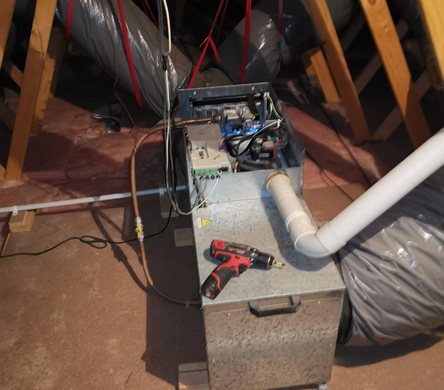
Diagnosis first, with instruments: static pressure readings, room-by-room airflow measurement, and a physical inspection of the runs. Then the fix that matches the finding, sealing joints and plenum connections, repairing crushed or disconnected runs, adding a return where a starved system gasps through one undersized grille, insulating ducts that run through unconditioned space, or rebalancing dampers so the far bedroom gets its share. You get the findings in plain English and a firm written price before any work.
Much of the housing west and south of downtown, and the older cores of Sand Springs and Sapulpa, predates modern duct design entirely. Systems were retrofitted into homes never framed for them, with undersized returns and long improvised runs. These houses are exactly where duct work pays best: modest sealing and return-air corrections routinely transform how the same furnace performs. New-build suburbs are not exempt, builder-grade duct installs have their own classic faults, unsealed boots and kinked flex runs being the repeat offenders.
If a replacement is on your horizon, duct condition belongs in that decision. New equipment pushed through bad ducts underperforms from day one, and correcting ducts during a changeout costs less than correcting them after. Our installation quotes flag duct issues honestly instead of letting the new equipment take the blame later.
Duct calls run everywhere the trucks run: Tulsa and Broken Arrow, Owasso, Bixby, Jenks, Sand Springs, Sapulpa, Claremore, Glenpool. Quoted diagnostic at booking, firm pricing before work, and the same honest rule as everything else we do, if the ducts are fine and the problem is elsewhere, that is what the report says.
Every leak in a supply run through an unconditioned attic pours heated air, and the money that heated it, into space nobody lives in, and every leak on the return side pulls attic-cold air in for the furnace to reheat. The system runs longer to hit the same thermostat number, wear parts log the extra cycles, and the coldest rooms stay coldest because they sit at the end of the weakest runs. Sealing shifts all of that at once, which is why duct correction so often outperforms equipment money in older housing.
Homes with rooms over garages get their duct runs read first, that floor is the metro's most common cold-room complaint and its most fixable.
Crawl-space and attic runs also age differently, attic flex bakes brittle in Tulsa summers while crawl runs collect moisture damage, so a whole-house duct read checks both worlds before quoting either.
Duct diagnosis is quoted like any other diagnostic, at booking, credited toward the work, and the repair quote lands in writing before sealing starts. Returns come as comfort first, the cold room warms, and as runtime second, the same thermostat number arrives with fewer burner hours. On aging systems that runtime reduction is equipment life you are buying back, which is why duct work pairs so naturally with keeping an older furnace alive honestly.
Heating exposes duct faults that cooling season hides. Warm air rises, so supply runs feeding floor registers from a crawl space fight physics as well as leaks, and homes with rooms over garages feel duct shortfalls hardest in January. If a room is livable in July and unusable in January, the gap between those two months is usually measured in duct performance, not equipment capacity, and measurement is exactly how we bid the fix.
Classic signs: rooms that never warm up, long furnace run times with mediocre comfort, whistling vents, and persistent dust. We confirm with static pressure and airflow measurements instead of guessing, so the fix targets the real fault.
Older retrofitted systems are where sealing pays best. Correcting leaks and starved return air routinely improves comfort more than equipment upgrades costing far more, and it makes any future system replacement perform the way its label promises.
 Talk to a person, any hour
Furnace acting up?
Get ahead of the cold snap